
California Street Searches Start at Parcels
A California street directory search is strongest when it follows records in order. Begin with the address, but treat it as a way to locate a parcel, not as proof of who is inside. The assessor may show an assessed parcel and a public owner relationship. A recorded deed can confirm a title transfer. Neither source is a census of people who use the address.
Use the county assessor and GIS viewer for the county where the address sits. Search the address as the portal expects it, then save the exact situs wording, parcel number, map position, and any note about a unit, corner, or alternate address. A California parcel boundary can guide the next search, but it is not itself the legal description in a deed.
- Search the county assessor by address or parcel number. Record the situs address, parcel number, status, and any alternate-location clue.
- Open the county GIS map and note the boundary, nearby parcel labels, address points, map date, and useful land-use or service layers.
- Check what owner details that county releases. Do not treat the owner’s mailing address as the address of every person at the site.
- Use an available recorder index with the parcel, document number, or owner name and an estimated date. If no web index exists, ask the recorder about its counter or copy channel.
- For a past household, compare a dated directory, census entry, city map, or building map. A voter file is not a casual address search.
Keep each result tied to its record date. The address trail may establish a parcel, an owner, or a dated name at a location, but those are different findings and should stay labeled as such.
California Street Directory Records by Custodian
No California office holds every address clue. Counties keep assessor, recorder, election, and court records; cities hold many permits and maps. Custodians set search fields, image access, coverage years, and privacy rules.
This coverage table separates the main address-linked records from what they can establish. A directory search is a route through county sources, not a single California roster.
| Record source | Custodian | Address connection | How to reach it |
|---|---|---|---|
| Assessment roll | County assessor | Parcel, situs address, assessed values, and owner details where released | County portal, public counter, or permitted request |
| Parcel map | County assessor or GIS office | Mapped parcel edges, address points, and selected local layers | County or city map viewer; check its date and legend |
| Deeds, easements, and maps | County recorder or clerk-recorder | Recorded parties, dates, legal descriptions, and title events | Local index, office terminal, counter, mail, or copy order |
| Permits and code files | City or county department | Work or administrative activity tied to a site | Department portal, records desk, or CPRA request |
| Voter information | Secretary of State and county elections offices | Limited fields in a file issued for an allowed purpose | Own-status portal or formal qualified-file process |
| Directories and maps | Libraries, archives, and map collections | Dated address or building context, not continuous residence | Online catalog, digitized volume, or reading room |
Use the parcel number to connect assessor and GIS results to a deed or map when the recorder accepts it. A street name alone may be less precise after a split, renaming, or unit change. Permit systems are local, and an application may name an owner, contractor, architect, or agent rather than a person who lived there.
California Assessor Search Fields Vary
County portals do not share one California search form. The Los Angeles Assessor Portal offers an AIN-or-address search and a map entry point. The screenshot shows its starting screen for an address lookup.
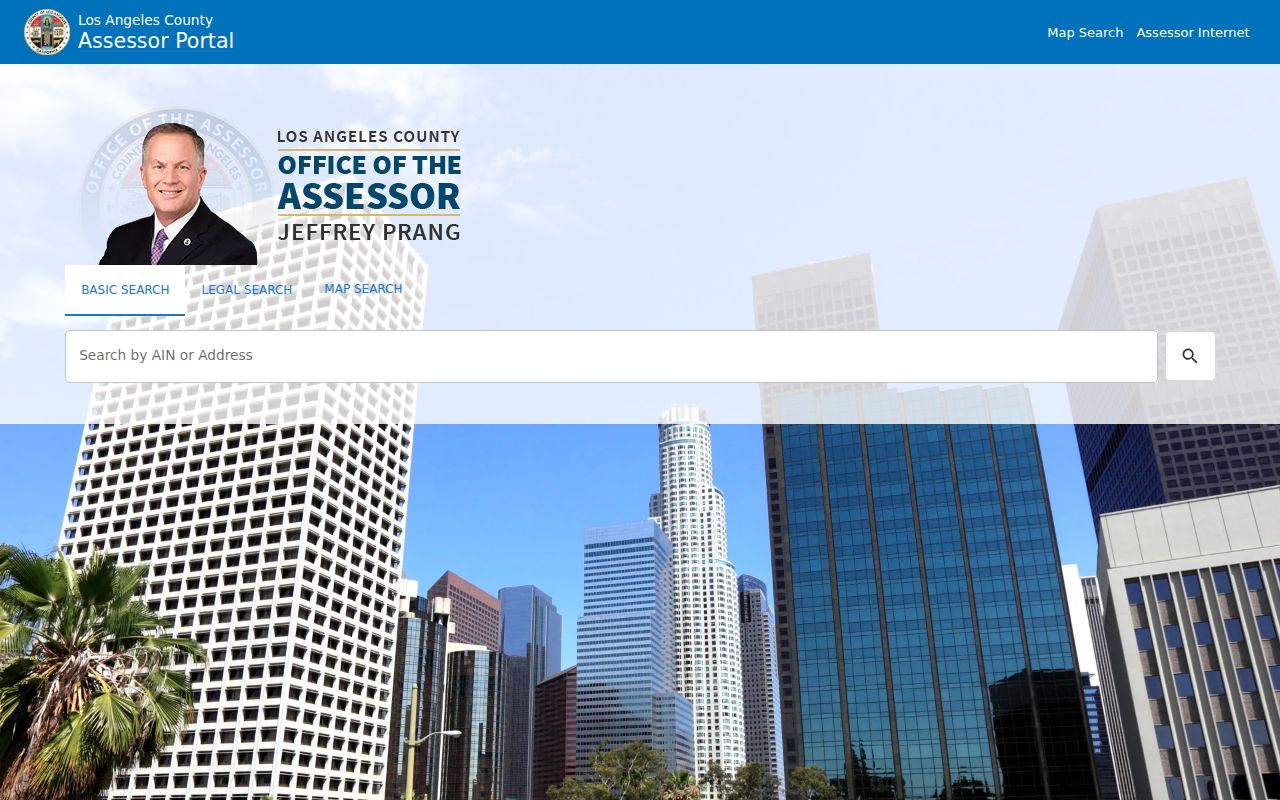
Los Angeles pages expose ownership and parcel-change, roll detail, and real-property value paths. County guidance says unrestricted owner-name web search is unavailable, and address matching can fail on multifamily sites, commercial parcels, corner lots, and new developments. Treat a returned match as a lead that needs confirmation.
Santa Clara makes the address fields more explicit. Its Real Property Search separates simple address, advanced address, and APN modes. The choices below show why a miss may reflect entry format rather than a missing California parcel.
| Search mode | Field or control | Use and format |
|---|---|---|
| Simple address | Property address | Enter the property address, then accept the terms and submit Search. |
| Advanced address | Street number, direction, name, type, unit, city | Direction, street type, and city use dropdowns; accept the terms before searching. |
| APN | Parcel number | Both 12345678 and 123-45-678 formats are accepted; the terms checkbox is required. |
The Santa Clara Real Property Search screenshot shows the county’s address and APN fields described above.
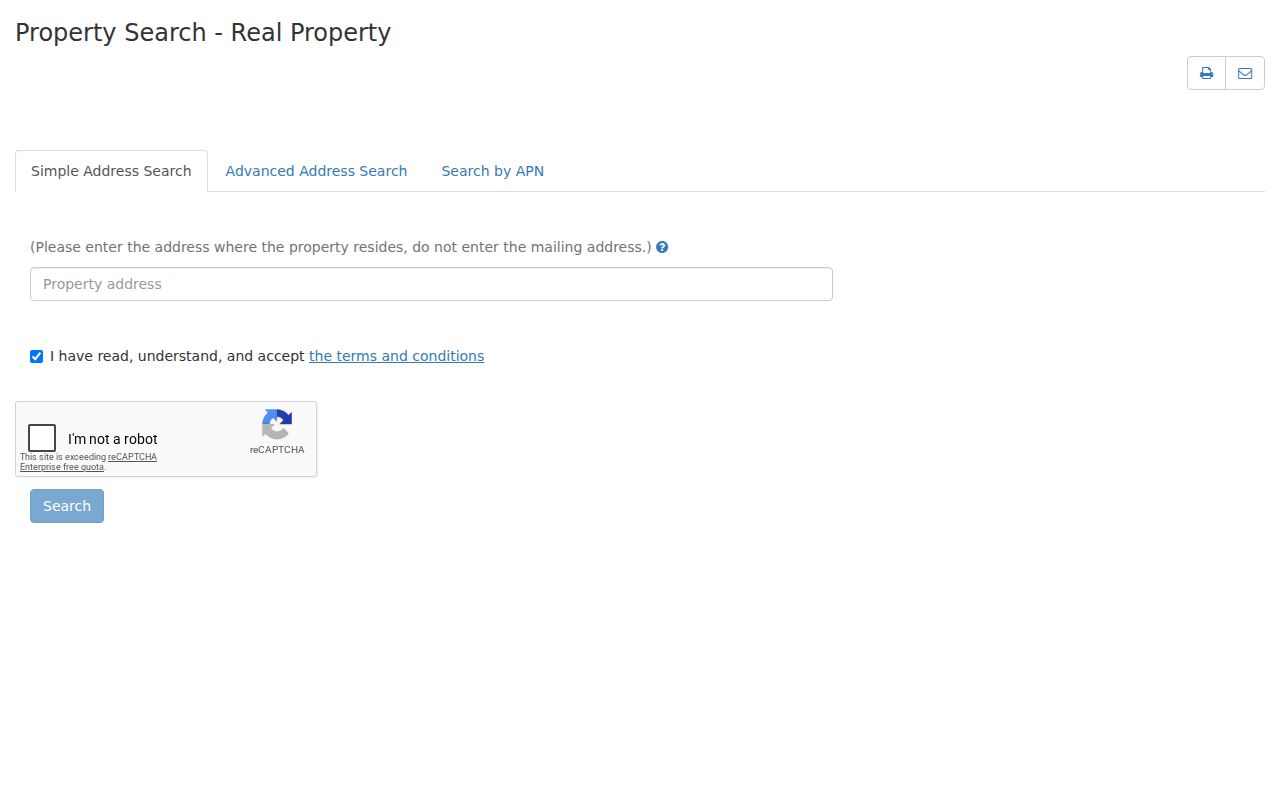
Santa Clara says to enter the property address, not the mailing address. Los Angeles instead begins with AIN or address and warns about address-match limits. These are county examples, not statewide rules; use the local assessor’s instructions for the county that owns the parcel record.
California Recorder Indexes Cover Different Eras
Once an assessor identifies a parcel or owner, the county recorder can confirm the instrument behind a sale, lien, easement, or other recorded event. California has no statewide deed database. A deed chain is a sequence of recorded documents, not a list of people who used the property.
Access differs sharply across counties. The Los Angeles Registrar-Recorder describes records from 1851 onward, with older and newer alphabetical name-and-year indexes split between office locations. The page says there is no internet or phone index search. Appointments, counter review, mail requests, and copy ordering are local routes.
The San Diego Recorder-Clerk offers an online official-record index from 1970 to the present. Web results are indexed information; images are viewed at public kiosks or purchased, and APN searching was removed. The screenshot links to this county-specific access page.
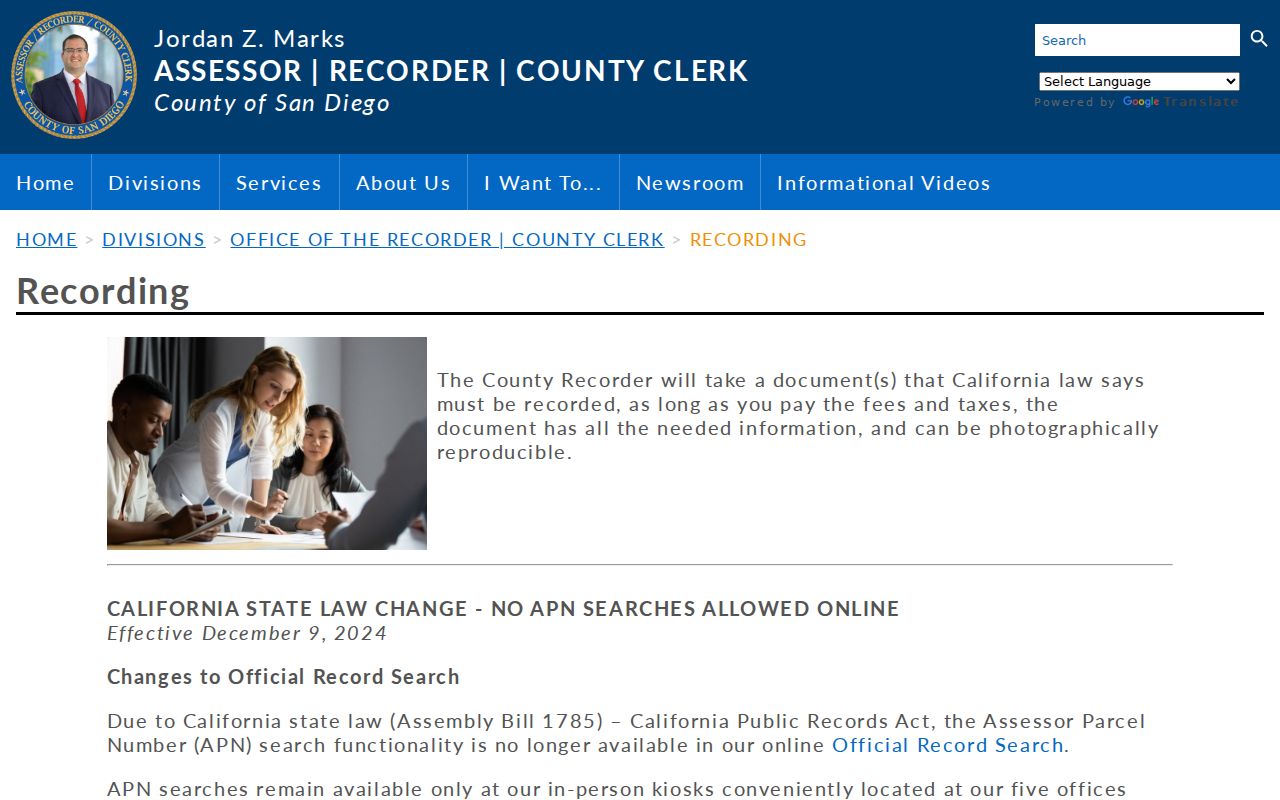
The linked county page identifies the index period and explains where images can be viewed or ordered; its online index does not cover California as a whole.
Imperial County’s RecorderWorks has an online grantor/grantee index beginning in 1986. It offers document number, book-and-page, map, name, date-range, and document-type paths. These examples help frame California's county-by-county spread, but the right index and cutoff must be checked for the address in question.
Note: An online index may show recording details without an image; ask the local recorder how older books, public terminals, and copy orders are handled.
California Street Addresses Need Crosswalks
No statewide street-renumbering date or universal parcel-digitization cutoff was found in the reviewed official material. That gap matters when tracing a California address: the same parcel can gain a unit, shift to a new number, sit on a renamed road, or split into separate legal lots. Do not bridge those changes by matching street text alone.
Compare the modern assessor situs, older directories, municipal maps, subdivision plats, deed legal descriptions, and recorded easements. A corner lot may have more than one address label. A map boundary helps locate a parcel, but the legal description in a recorded instrument controls the land described. Preserve a dated “then and now” note when sources use different street names or numbers.
- Parcel
- A mapped piece of land identified by the assessor; its boundary is not automatically the deed’s legal description.
- Situs address
- The street location assigned to the parcel, distinct from an owner’s mailing address.
- Plat
- A recorded map that lays out lots, streets, or subdivision lines.
- Criss-cross directory
- A dated directory arranged by street or address, useful for seeing a name tied to a place in that issue.
These terms keep the property trail clear. A situs address points to a location; a title document names parties to a legal event; neither proves who was present on a particular day.
California Street Directory History by City
For an older street, look for a dated reverse directory, city map, census schedule, newspaper reference, or Sanborn map. Those sources can test address continuity, but each has a defined year and geography. A local library catalog can help identify the runs held for a city; it is a route to collections, not a complete statewide name search.
San Francisco Public Library documents city directories from 1850 through 1982, with reverse directories from 1953. Its year-by-year directory list shows gaps and publisher changes. The city's 1850 federal census was lost, so early directory issues carry extra value for certain questions, but a directory entry remains a dated appearance rather than proof of continuous residence.
Most 1890 federal population schedules were destroyed nationally, while San Francisco’s 1850 census was lost locally. That makes the surviving dated directories useful, but a directory entry still records a person at one published date and place. For the wider historical collection shelf, see the California city directory collections.
Note: An entry names a person at a published date and place; compare nearby issues and an independent source before treating an address as continuous.
California Voter Files Are Not Street Rosters
California’s voter record rules do not provide a public address lookup for any person. The Secretary of State’s Voter Status tool is for an individual checking their own registration, name, party preference, polling place, or ballot information. It uses an exact identity match. It does not let a neighbor search a street for registered voters.
A qualified researcher may apply for a statewide file, a county file, or a limited specific-voter file for an allowed election, political, scholarly, journalistic, or governmental purpose. The formal application asks for identity, purpose, intended use, government photo ID, and a wet signature, then is submitted by mail or in person. The Secretary of State’s voter-file instructions describe the process and limits. Names in a file can be sensitive, and the file date does not establish current occupancy.
Voter registration data is exempt from the ordinary California Public Records Act route. A public-records request cannot bypass voter-file restrictions. For a question about a precinct or district, contact the relevant county elections office.
California Owners and Occupants Differ
Keep four address terms separate: situs address, owner of record, owner mailing address, and current occupant. An assessor may show an owner or assessment relationship where local policy permits. The mailing address may belong to a trust, business, attorney, or out-of-area owner. A deed may name grantees or lenders. None of these records lists every person who uses a California address.
County disclosure differs. Sacramento’s assessor public-record page lists assessment fields but says owner information is not shown online; its office offers address or parcel requests by phone, email, or public counter, with phone and email inquiries limited to two parcels per day. Los Angeles offers AIN or address search but restricts unrestricted web owner-name search. Check the live county rule before expecting a name field.
Exemptions or a mailing address can suggest an owner connection, not a full account of the people present. Tax-default notices, transfer-tax values, and parcel-change history describe assessment or legal events. They do not date a person’s move-in, prove a family relationship, or turn address research into a household list.
Continue California Street Searches Offline
A portal may stop at an index, hide a field, or begin after the date you need. The next step is the office that keeps that record. California has 58 counties, so a useful request names the county and department instead of asking a statewide office to search local files.
Record the exact address, parcel number, name spelling, date range, search mode, and result date. Then use the closest custodian channel:
- Ask the assessor about public counter access, parcel detail, or a permitted owner-information request.
- Contact the recorder about index books, kiosk images, mail copies, document numbers, or an appointment.
- Send a focused California Public Records Act request to the city or county department for existing permit, map, or administrative records.
- Ask a local library or county archive for the exact directory, map, newspaper, or microfilm run.
- For tax bills or delinquency details, contact the county Treasurer or Tax Collector rather than the recorder.
A CPRA request goes to the agency that holds the existing record. It does not require an assessor to create a household list or disclose information protected by law. California’s Secretary of State PRA guidance explains the state agency route; county and city departments have their own request channels.
Note: Keep the response, cutoff date, fee quote, and “no record” result with the address trail so another search can start from the right point.
California Street Records Have Privacy Limits
Public property records are bounded by privacy rules. California restricts motor-vehicle information under the Driver’s Privacy Protection Act, and voter data has a qualified-use process. Utility accounts, school records, and delivery data are not a general public source for identifying people at a street address. A redaction also does not mean that a record or person is absent.
The Secretary of State’s Safe at Home program offers eligible participants a substitute mailing address and confidential-voter option. An actual property address may still appear in a land record or legal description when a participant owns property. Do not try to infer or expose a protected location from surrounding records.
Lawful personal use. Use California address records for a legitimate personal, historical, or civic question, and share only what is needed. Never follow, intimidate, stalk, or harass a person based on a record match.